
A closer look at Scallop’s strategy to bridge traditional finance with DeFi through Sui.
When most DeFi protocols chase hype cycles, Scallop has been quietly carving its niche: an institutional-grade money market built entirely on the Sui blockchain. Founded by Kris Lai and Donnie Chen, Scallop aims to blend the battle-tested reliability of Compound and Aave with the composability and low fees of Sui’s Move-based architecture.
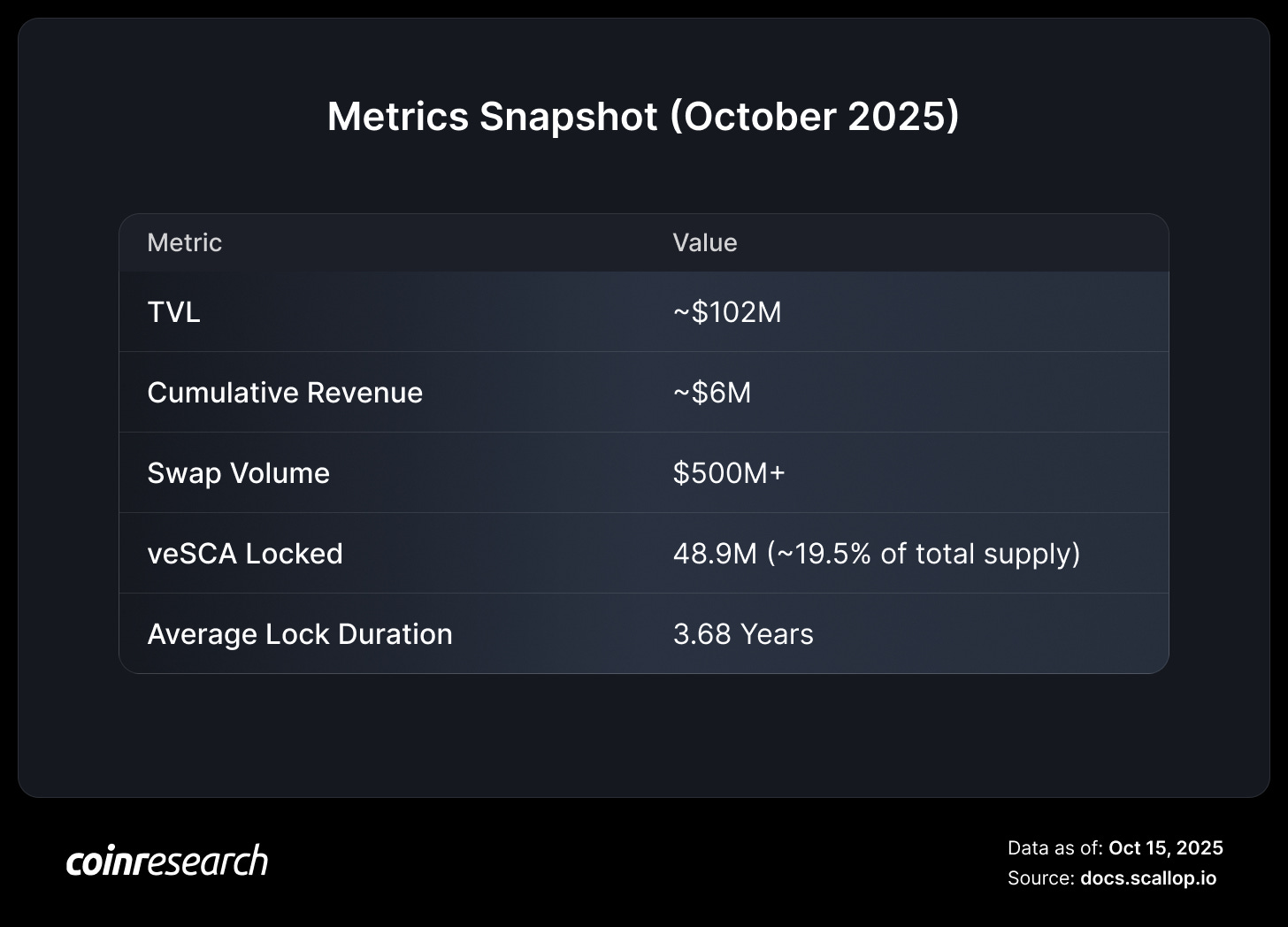
Since launching in July 2023, the protocol has already reached over $6 million in revenue and more than $100 million in TVL, making it the leading DeFi money market on Sui.
Building the Bridge Between DeFi and Institutions
Traditional DeFi lending protocols like Aave, Compound, and Solend have proven the concept, but they often price out retail users and fail to meet institutional risk standards. Scallop tackles both ends: it lowers transaction costs for small users while layering in enhanced security features, multiple audits, and a soon-to-launch anti-price manipulation (APM) module for whales and funds. The team’s mission is straightforward: make on-chain lending as safe, efficient, and composable as the traditional financial tools institutions already trust.
How It Works
Scallop’s architecture stands out for its precision. It separates deposits from collateral, ensuring that liquidation events remain controlled rather than catastrophic. Its soft liquidation mechanism allows only the necessary portion of collateral to be sold, unlike the “all-or-nothing” approach of older protocols.
Every deposit is tokenized into sCoins, which accrue yield and can be used across Sui’s ecosystem. From DEXs like Cetus to stablecoin protocols like Bucket. This composability is the backbone of Scallop’s long-term moat.
The protocol also introduces Scallop Tools, a user interface for Sui’s “programmable transaction blocks.” It lets users bundle multiple actions—swaps, transfers, merges—into a single transaction, cutting gas costs and simplifying DeFi workflows.
Behind the scenes, Scallop relies on X-Oracle, an in-house oracle system designed to cross-verify pricing data from multiple sources, starting with Pyth Network. The upcoming APM module will extend this protection by automatically reducing collateral weights when suspicious price movements are detected.
Tokenomics: Incentives That Stick
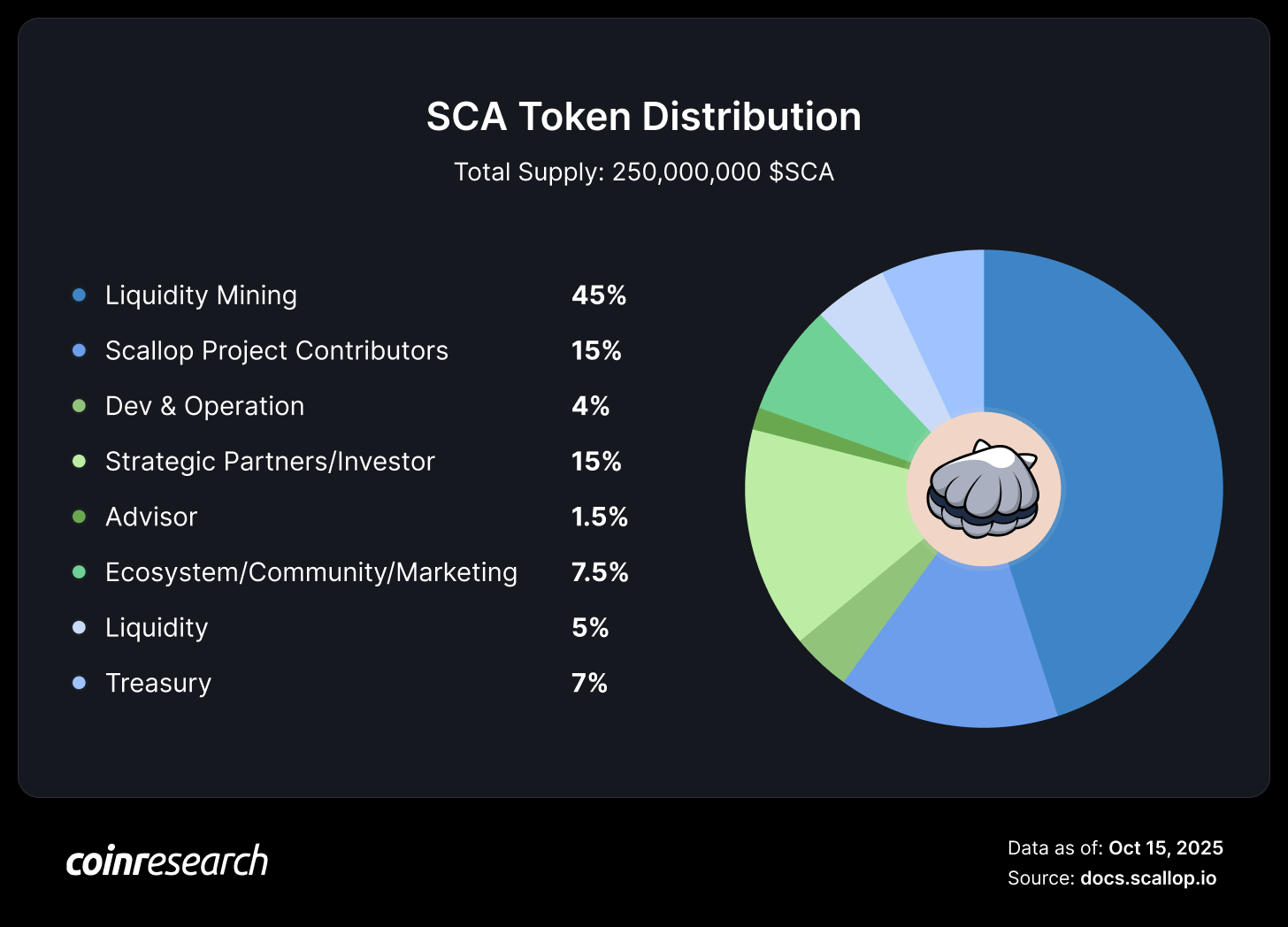
The SCA token powers Scallop’s ecosystem, following a clear long-term alignment model:
-
250 million total supply, with 45% reserved for platform incentives and liquidity mining.
-
Around 20% of total supply (≈40% of circulating) is locked as veSCA for an average of 3.7 years, showing strong holder conviction.
Locking $SCA doesn’t just remove supply, it grants boosted rewards, fee discounts, and participation in loyalty buybacks once protocol revenue milestones are hit. veSCA holders even benefit from airdrops across the Sui ecosystem.
This approach mirrors Curve and Pendle’s vote-escrow model, but built from scratch in Move, optimized for Sui’s modular structure.
Market Context and Competitors
Scallop isn’t trying to be the next Aave; it’s trying to be THE Aave of Sui. With competitors like Solend (on Solana) and Turbos (on Sui’s DEX side), its edge lies in security and full-stack integration.
While Aave and Compound dominate Ethereum-based lending with multi-chain exposure, they also face high gas fees and slower iteration. Scallop benefits from Sui’s sub-second finality, Move safety, and a tighter ecosystem, allowing faster product rollouts and richer composability.
The Road Ahead
The Scallop team has several catalysts on the horizon:
-
Scallop Tools V2 – integrates flash loans and swaps directly into the lending UI.
-
APM Module – guards against price manipulation with automated safeguards.
-
No-Liquidation Vault – allows users to protect positions from forced liquidation.
-
Governance Expansion – veSCA holders to gain full voting rights.
Each feature reinforces the same vision: a DeFi protocol ready for institutions, not just retail farmers.
The Bottom Line
Scallop’s next growth phase hinges on tangible catalysts like the upcoming Asset Portfolio Manager (APM) launch and potential CEX listings on major exchanges such as Binance, Bybit, or Gate, events that historically ignite liquidity and trading volume. With SCA’s circulating supply still low, future token unlocks in 2026–27 could introduce volatility that rewards attentive traders while offering long-term investors strategic entry points. For those seeking exposure to the Sui ecosystem, Scallop represents more than a DeFi play, it’s an infrastructure bet on Sui’s expanding financial stack. Supported by consistent audits, rising veSCA participation, and a security-first architecture, Scallop stands out as a credible institutional DeFi project with medium risk and high potential upside.
Hit the subscribe button below for more crisp crypto breakdowns delivered straight to your inbox. For those wanting deeper dives, like advanced investing and trading insights, detailed research reports, market sentiment assessments, and AI-powered predictive analytics, you’ll find all that and more in our Coinresearch AI platform starting at just $9/month (and yes, prices are going up soon!).