
The Trump Family’s Bold Leap into DeFi
In the whirlwind of 2024’s political and crypto landscapes, the Trump family unveiled World Liberty Financial (WLF), a decentralized finance (DeFi) platform aimed at democratizing access to financial services. Promising to “keep the dollar digital,” WLF emerged as a response to the Trump Organization’s debanking experiences, positioning crypto as an always-accessible alternative. By late 2025, this venture had reportedly propelled the family to nearly $1 billion in crypto profits, blending family branding with blockchain ambition.
Founding and Family Ties
WLF is unmistakably a Trump family enterprise. Co-founded by Donald Trump and his sons—Donald Jr., Eric, and Barron. The project partnered with DeFi experts Chase Herro and Zak Folkman, plus Zach Witkoff, son of Trump ally Steve Witkoff. Even after Donald Trump’s return to the presidency in January 2025, where he stepped back to “co-founder emeritus” status, his sons remain actively involved. Majority-owned by Trump interests via DT Marks DeFi LLC, the family’s stake initially hit 75% before trimming to around 38-40% amid scrutiny. Barron Trump’s estimated $45 million in WLFI holdings has drawn particular regulatory attention.
Tokenomics and Fundraising Triumphs
At WLF’s core is the $WLFI governance token. Private sales raised $550 million by March 2025, with the Trump family contributing or allocating about $390 million. Donald Trump personally pocketed around $57 million from early sales. High-profile backers amplified the hype: Tron founder Justin Sun invested $30 million pre-election, boosting to $75 million post-victory. Middle Eastern funds like Aqua 1 and Abu Dhabi’s MGX added $100 million and facilitated a $2 billion Binance deal using WLF’s stablecoin.
The WLFI token launched publicly in September 2025, surging to a $3.5 billion market cap before volatility kicked in. However, insider control—initially 60% ownership—sparked concerns, including the ability to blacklist wallets, clashing with DeFi’s decentralized ethos.
The USD1 Stablecoin: A Digital Dollar Anchor
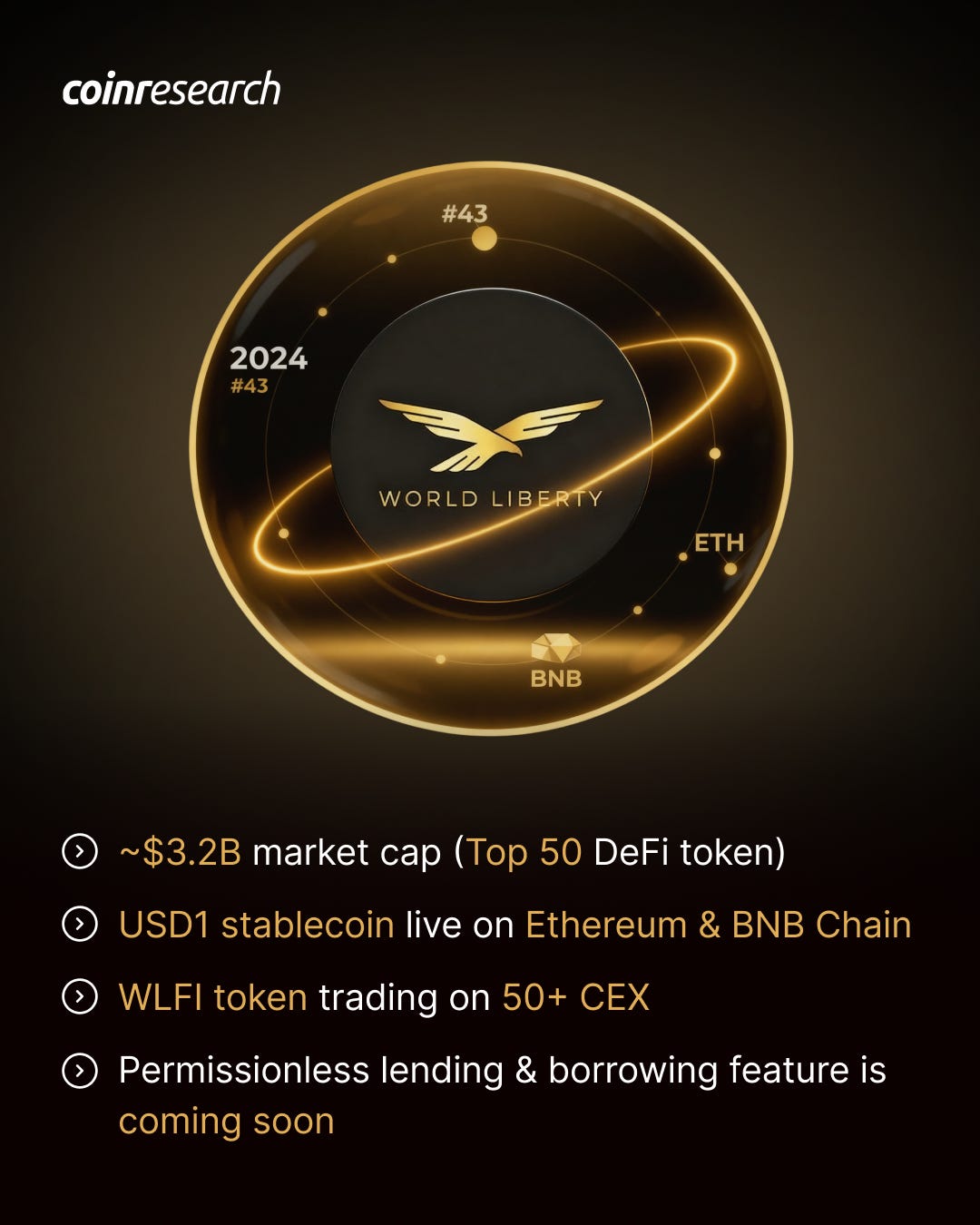
WLF’s USD1 stablecoin, launched in March 2025 on Ethereum and BNB Chain (later Aptos), is pegged 1:1 to the USD and backed by U.S. Treasuries and cash equivalents. It quickly reached $2.5 billion in circulation, listed on major exchanges like Coinbase, Binance, and Kraken. Designed for DeFi lending and cross-border payments, USD1 embodies WLF’s narrative of preserving dollar dominance in a tokenized world. This aligns with 2025’s GENIUS Act, signed by President Trump, which formalized stablecoin regulations.
Investors, Alliances, and Brewing Controversies
WLF’s investor roster is star-studded but contentious. Justin Sun’s involvement revived early momentum, but tensions erupted when WLF froze his $107-900 million in WLFI tokens amid a 40% price crash, citing potential manipulation. Sun publicly protested, highlighting a rift and questions about true decentralization. Over 200 other wallets were similarly frozen, alarming the crypto community.
Middle Eastern ties, including MGX’s Binance investment via USD1, drew U.S. lawmakers’ ire, with Senator Elizabeth Warren calling deals “shady.” Partnerships like ALT5 Sigma aim to bridge TradFi and DeFi, but they’ve intensified scrutiny over political influence.
Regulatory Tightrope and Political Overlap
WLF’s Trump connections place it at the heart of policy debates. Investigations by Senators like Richard Blumenthal probe transparency and conflicts, especially post-Trump’s pro-crypto policies easing SEC barriers. While WLF insists on independence, critics argue the president’s clout provides unfair advantages, fueling ethics concerns.
Strengths, Red Flags, and the Road Ahead
WLF boasts rapid fundraising, top exchange listings, and a passionate community of over 85,000 wallets. Its vision of tokenized real-world assets and institutional DeFi integration positions it as a bridge between worlds.
Yet, red flags include centralization via wallet freezes, opaque profit structures favoring the Trumps, and delays in launching core lending features—over a year since announcement. Critics see it as more family revenue stream than revolutionary protocol.
As 2025 closes, WLF stands as a high-stakes experiment in Web3. Success could mainstream DeFi with political backing; failure might underscore risks of power and crypto’s entanglement. With USD1 gaining traction and WLFI volatile, the project’s future hinges on delivery, trust, and navigating scrutiny.

Hit the subscribe button below for more crisp crypto breakdowns delivered straight to your inbox. For those wanting deeper dives, like advanced investing and trading insights, detailed research reports, market sentiment assessments, and AI-powered predictive analytics, you’ll find all that and more in our Coinresearch AI platform starting at just $9/month (and yes, prices are going up soon!).